FX-Sabers – Lessons from an Older Internet

This post covers the custom lightsaber-building world, specifically back around 2009, and what it makes me think about knowledge, learning, and community today.
Throwing It Back to 2009
It was 2009 and near the start of the school year. Twilight was in theaters and Guitar Hero was still huge. Coming back from summer I had a lot on my mind. I was going into my freshman year of high school. Top of mind was my cousin Zach's Master Replicas Darth Vader lightsaber that he'd showed off all summer. I couldn't get over it. Here we were, 30 years after Star Wars' release. It was the future, lightsabers existed. Zach had one, I did not.
My dad had this system where if we really wanted to purchase something, we'd have to research it and put together a pitch to present. By the time school started, I was deep in the research phase. It was during this time that me and my Dell OptiPlex GX50 found our way onto FX-Sabers.com.
Started in 2005, FX-Sabers was, and still is, a site where lightsaber enthusiasts and hobbyists get together. It was built around Force FX lightsabers, the light-up replicas like the one my cousin had. Over time, it grew into a hub for the wider custom saber scene. Many of the lightsabers themselves, at the time I discovered the site, were built out of PVC pipe and a bunch of electrical switches.
I remember this as an early interaction with an online forum for me. The peaks of Bebo and MySpace had come and gone, Facebook was making its way onto the scene, but a space to chat with total strangers? That was still foreign. People with cool names like Novastar and Jango Fett had racked up the most posts. Intimidated, but undeterred, I signed up. I was going to build a lightsaber.
Finding Community Online in 2009
Finding FX-Sabers was a huge discovery. The site's forum had subtopics for everything you could imagine. From galleries of other people's custom builds to open source repositories for sound effects and electrical chip configurations. I started with what was called the Jedi Temple, in the Padawan's Training Room. Here, I found a lot of useful information to get started. I was also introduced to some of the main people holding it down for custom saber making. I asked them questions, lots of questions.

An example topic from FX-Sabers.com
I got to learning the important fundamentals of lightsabers: hilt design, blade electronics, sound boards, power supplies – not to mention crucial features like flash-on-clash, blade flicker, ignition, and color. This was also my introduction to the idea of Greebles. I cannot understate the magic of what it felt like to unearth this world. People comparing the aesthetics of an Obi-Wan Episode II blue vs. an Obi-Wan Episode IV blue – and having the technology and know-how to replicate either. I had found a community I wanted to be part of.
Building a Custom Saber in 2009
I started by using Custom Saber Shop's MHS(Modular Hilt System), a program built to let you design a hilt using a bunch of different components. You could select switch types, speakers, pommels and sound boards, all within their application. Check out this video tutorial – it's the most 2000s thing I've seen in a while!

The MHS Saber Builder in action.
Once I landed on a design, I needed to choose how I wanted my blade to work. I really liked the idea of being able to swap out colors so I went with a single white LED and some color lenses. The light would be magnified down an acrylic tube blade with a mirror at the end that helped diffuse it.
Here's what it all looked like when the parts arrived:
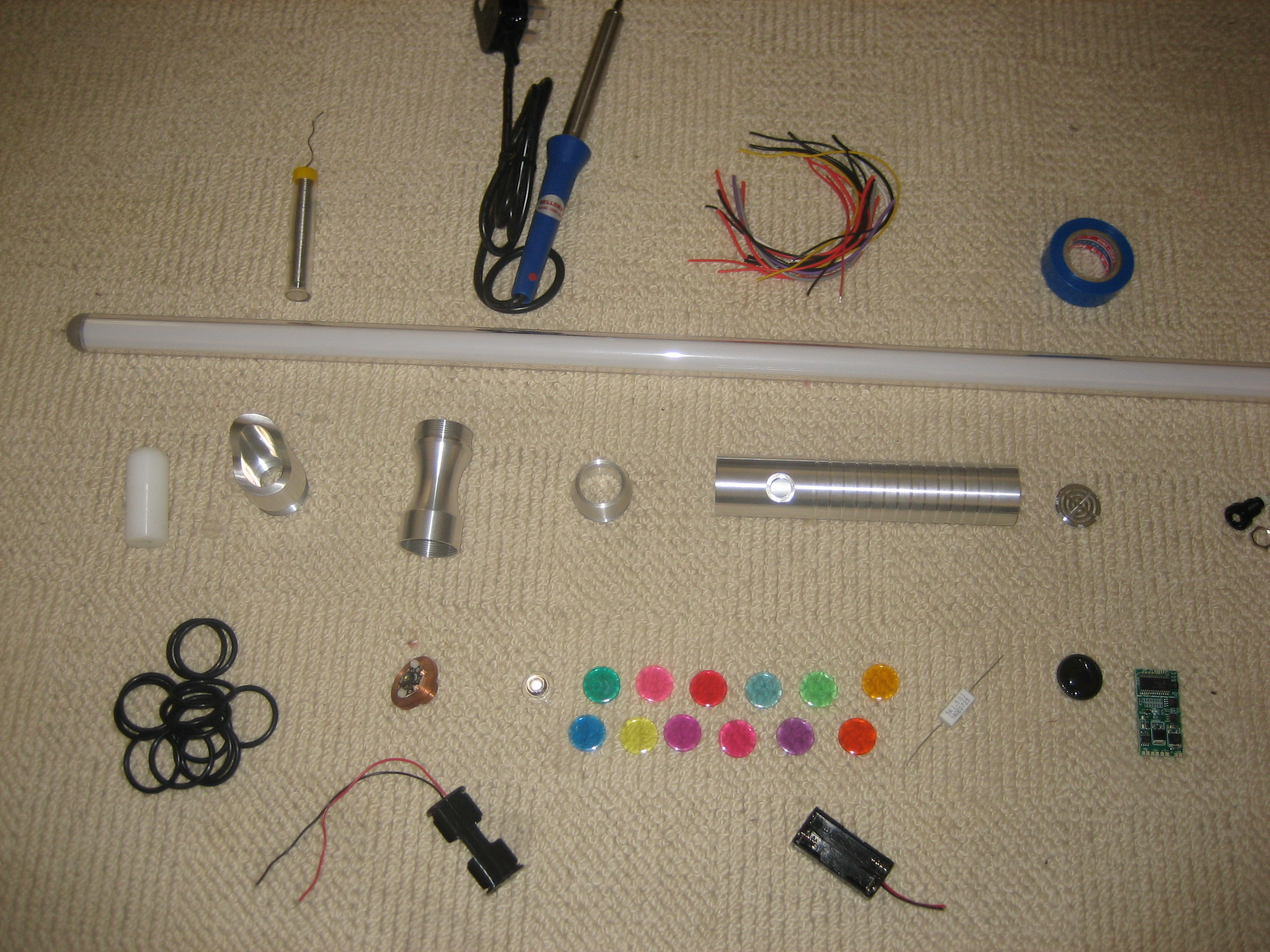
An exciting day at house Target.
I learned to solder in shop class, and was extremely excited to apply that here.
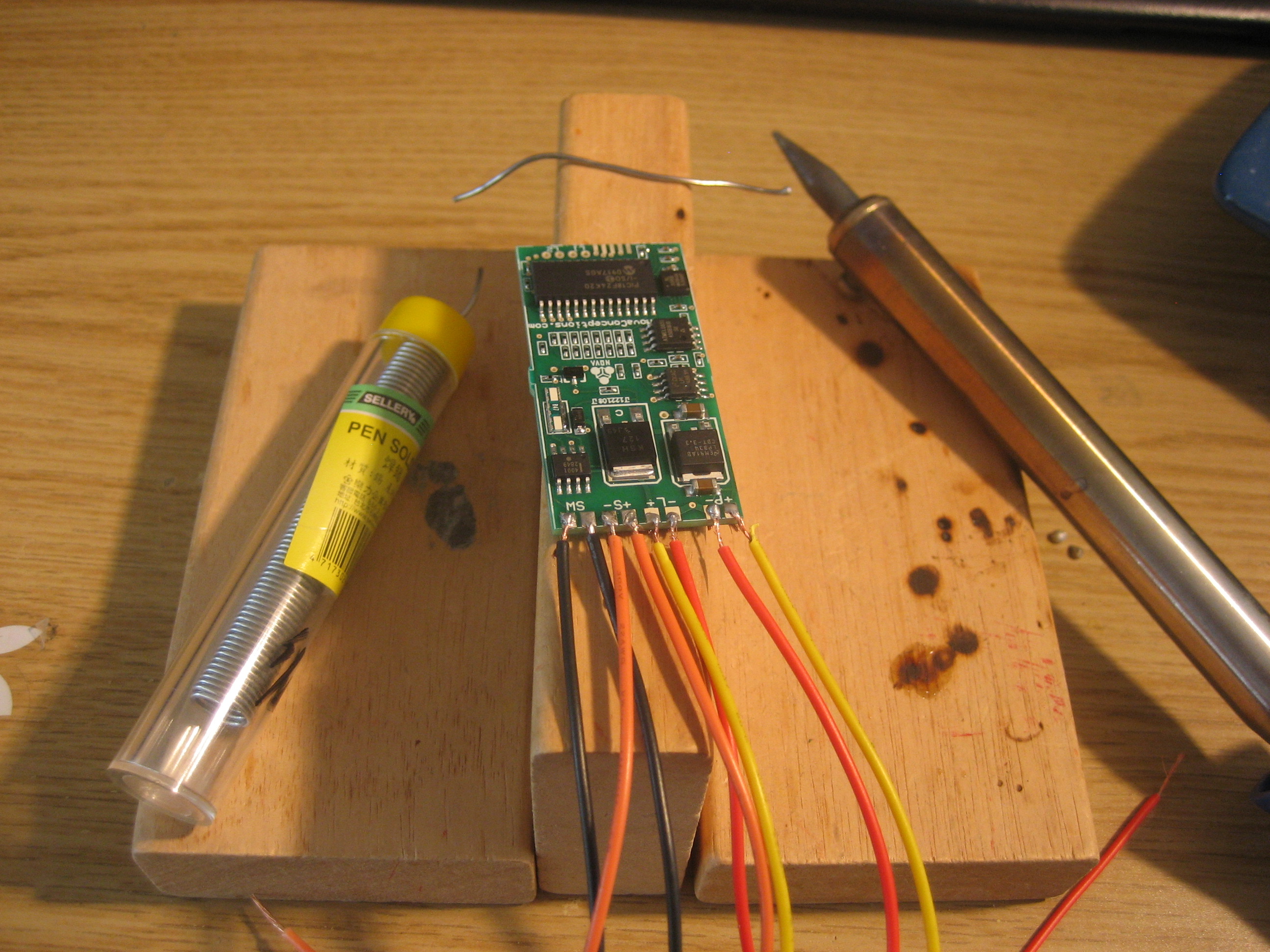
My trusty soldering set up.
Video: Lightsaber show and tell. Included to emphasize my authority on the subject.

The completed lightsaber.
Public Forums in Trouble in 2026
I've been thinking about this experience with FX-Sabers for a while now. I think because I've watched the process of research become more lonely, and I think something important is being lost in today's AI era. Look no further than the rise and demise of Stack Overflow to realize there's been a dramatic shift in how knowledge and advice is sought and acquired. What was once going online to find people, is rapidly turning into going online to interact with a robot, trained on people. I am not the best person to articulate this change, but I have experienced it first hand. When I think about people like Novastar that were out there, actually doing this stuff and writing about it, what that did for my motivation, curiosity, and dedication, I'm disheartened to think how things might change.
I made my lightsaber for me, don't get me wrong, but I contributed knowledge back to the internet because I wanted to impress Novastar. That's the mechanism. That's where we're trespassing. Beyond the complaint that today's a more solitary vibe, there's a slow burn degradation of knowledge generating ecosystems happening. The important thing I'd argue: is that forums don't just host knowledge, they generate it – in that fertile interaction between novices asking questions and experts debating the answers. When you create an avenue with less friction than asking questions on the internet, you remove those novice questions, and then you remove the human incentives at work generating more knowledge, and you do yourself and the world a disservice.
Consider for a moment the open-source sound repositories from FX-Sabers, people using the forum as a commons, where they give away hard-won knowledge for free to strangers. Who's making that stuff if no one uses the platforms anymore? How does it feel to know the public commons is being hoovered up and recycled for a price by AI? It's a problem open source has been grappling with for some time, but in the case of forums, at a certain point, the replacement was trained on the thing it’s replacing, so when the original degrades, so does the replacement. At least in terms of any usefulness to us (humans). How can that be a sustainable business model?
Lastly, it was my experience with FX-Sabers, and it's been my experience since, that these communities are a place where taste is transmitted. Not all answers were simple facts. The episode II blue vs episode IV blue argument was won by votes, and it drove which LEDs were produced more that year. Again, it's super important that we protect this relationship between learner, authority, and debate. It's the Padawan, and the Jedi Council.
This has all been discussed a lot. See: Sherry Turkle of MIT, Maggie Appleton of her blog, James Vincent of The Verge, or Cory Doctorow of Enshitification. Or if you want to get more academic: Large language models reduce public knowledge sharing on online Q&A platforms. Many point to the problem, and some provide some solutions. So let's look at how to help.
Lessons to Apply in 2026+ (How to Use AI, Without Destroying Forums)
WIP PLACEHOLDER - TO BE CONTINUED. CALL TO ACTION AND ENDING.s
Why we make knowledge is as important as how we consume it.